News
UK Inflation Rises to 3.6% as Diesel Hits a Record 199.5p
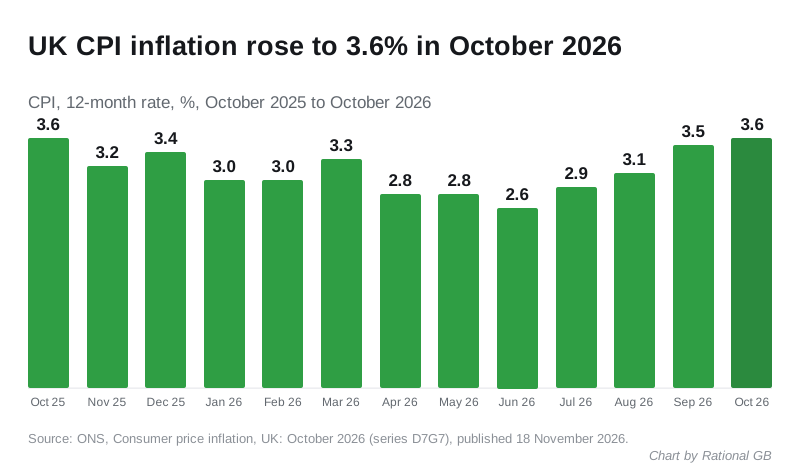
UK inflation rose to 3.6% in the 12 months to October 2026, up from 3.5% in September, and this page covers what that means for your savings along with four other money stories from the past week. The others: private rents are up 3.8% in a year, more big employers now offer payroll savings schemes, the FCA has checked whether its persistent credit card debt rules worked, and a reality TV star has been fined for illegally promoting forex trading on Instagram.
CPI inflation rises to 3.6%, driven by fuel
The Consumer Prices Index rose by 3.6% in the 12 months to October, up from 3.5% in September, according to the ONS release on 18 November. Prices rose 0.5% in the month alone. The biggest push came from motor fuels: petrol averaged 174.7p a litre, the highest since August 2022, and diesel averaged 199.5p, the highest since the ONS records began in January 1996. Motor fuel prices were up 33.2% on a year earlier. Tobacco also rose, because this year’s duty increase took effect on 1 October rather than late November. Core CPI, which leaves out energy, food, alcohol and tobacco, was 2.8%, little changed, and restaurants and hotels pulled the other way. RPI, which still sets some student loan interest and index-linked payments, rose to 4.2%.
The Bank of England said when it raised Bank Rate to 4% on 5 November that it expects CPI to reach around 5% by the middle of 2027 before falling back. For savers, the useful comparison is your rate after tax against inflation. A 4.5% easy-access account paid outside an ISA leaves a basic rate taxpayer 3.6% once their personal savings allowance is used up, which only matches October’s inflation figure. Our savings interest tax calculator shows where your own allowance runs out, and cash ISA or stocks and shares ISA covers money you will not need for five years or more, where inflation does the most damage. The next Bank Rate decision is due on 17 December.
Private rents up 3.8% in a year, London house prices falling
The ONS figures for private rents and house prices, also published on 18 November, put the average UK private rent at £1,411 a month in October, up 3.8% on a year earlier, the same rate as in September. Rents rose fastest in the North West of England (5.6%) and slowest in the South West (3.3%). England averaged £1,472, Wales £849 and Scotland £1,015.
House prices are moving more slowly. The average UK price was £273,000 in September, up 1.2% in a year. London prices fell 3.5%, and Inner London fell 7.2%, its largest annual fall since August 2009. If you are saving for a first home, a Lifetime ISA adds a 25% government bonus on up to £4,000 a year for a property worth up to £450,000; Lifetime ISA or pension for a house deposit sets out the trade-offs.
BT, M&S and Tesco staff can save straight from their pay
The Treasury said on 14 November that BT, M&S, Veolia and Home Bargains have joined the National Coalition of Workplace Savings, whose members agree to offer staff a payroll savings scheme. Tesco has launched its own scheme and is working with the coalition. Co-op, Bupa, Mitie, Greene King, Burger King UK and Travelodge were already members. The government says over half a million more workers will now be able to use one. You choose a share of your pay to go into a savings pot before it reaches your bank account, and you can take the money out at any time without a charge.
A savings scheme through work is different from your workplace pension: the pension is for retirement and carries tax relief, while payroll savings are for emergencies and everyday goals. If your employer offers one, the main benefit is that saving happens before you can spend the money. It is still worth checking the interest rate against the best easy-access accounts, and our compound interest guide shows how much a regular habit adds up over time.
FCA says its persistent credit card debt rules helped, but debt is rising again
The FCA published an evaluation of its persistent debt rules on 18 November. Since 2018, card lenders have had to contact customers who paid more in interest, fees and charges than off their balance over 18 months. The share of card accounts in persistent debt fell from 7% in 2018 to 3% in early 2023. Of those who got a first letter, over half had left persistent debt within 18 months, and almost two thirds within 27 months. The FCA is careful to say it cannot prove the rules alone caused this, given Covid and the cost of living crisis in the same period. It also says card use and defaults have risen since, and that its early data suggests persistent debt is rising again, though it is still below the 2018 level.
If you have had a persistent debt letter, the plain arithmetic is that card interest at typical rates is far higher than anything savings or investments reliably return, so clearing it comes before investing. Lenders must offer support, such as reducing interest or charges, if you cannot afford to pay more, and free debt advice is available through MoneyHelper. Our guide to investing on a small salary covers the order in which to tackle debt, emergency savings and investing.
Geordie Shore star fined for promoting forex trading on Instagram
The FCA said on 19 November that Aaron Chalmers, who has more than 2 million Instagram followers, was fined £3,072 and ordered to pay £2,836 in costs at City of London Magistrates’ Court for illegally promoting foreign exchange trading through contracts for difference. A second finfluencer, Jason Agbodza, was fined £1,173 with £2,114 costs. Neither was authorised to promote the investments. The FCA has found that about 80% of retail customers lose money on CFDs, and in an April week of action it found 1,267 illegal financial adverts on social media, 66% from firms or people already on its Warning List.
Before acting on any investment tip from social media, check the firm on the FCA register and the Warning List; a promoter who is not authorised is breaking the law. Leveraged trading is not investing in the sense this site covers. For money you want to grow over years, how to start investing in the UK and our list of common investing mistakes are better places to begin.